The Bessify Energy System

One 6 MWh platform.
Three operating durations

Bessify designed the complete system: how the cells are arranged, cooled, measured and protected, how power is converted, and how the controls operate. The same 6 MWh Energy compartment serves all three configurations. Four, two or one Bessify 750 kVA inverters provide two, four or eight hours of storage respectively. The design is complete and components for Energy, Power and Thermal are available. The 6 MWh Energy compartment is built, and the build process and checks are being recorded for repeatable manufacture.

Architecture

Three compartments. Each with one job

The single-module Energy architecture brings the cells, heat exchangers, compression and sensing into one coordinated arrangement. It reduces duplicated electronics across the system. Power conversion and the thermal plant occupy separate compartments, with defined connections to Energy.

01 · Power

Conversion, protection and control

Houses the inverters, switching and isolation equipment, battery management, temperature and displacement sensing electronics, protection, and the edge computer.

02 · Energy

Cells under controlled conditions

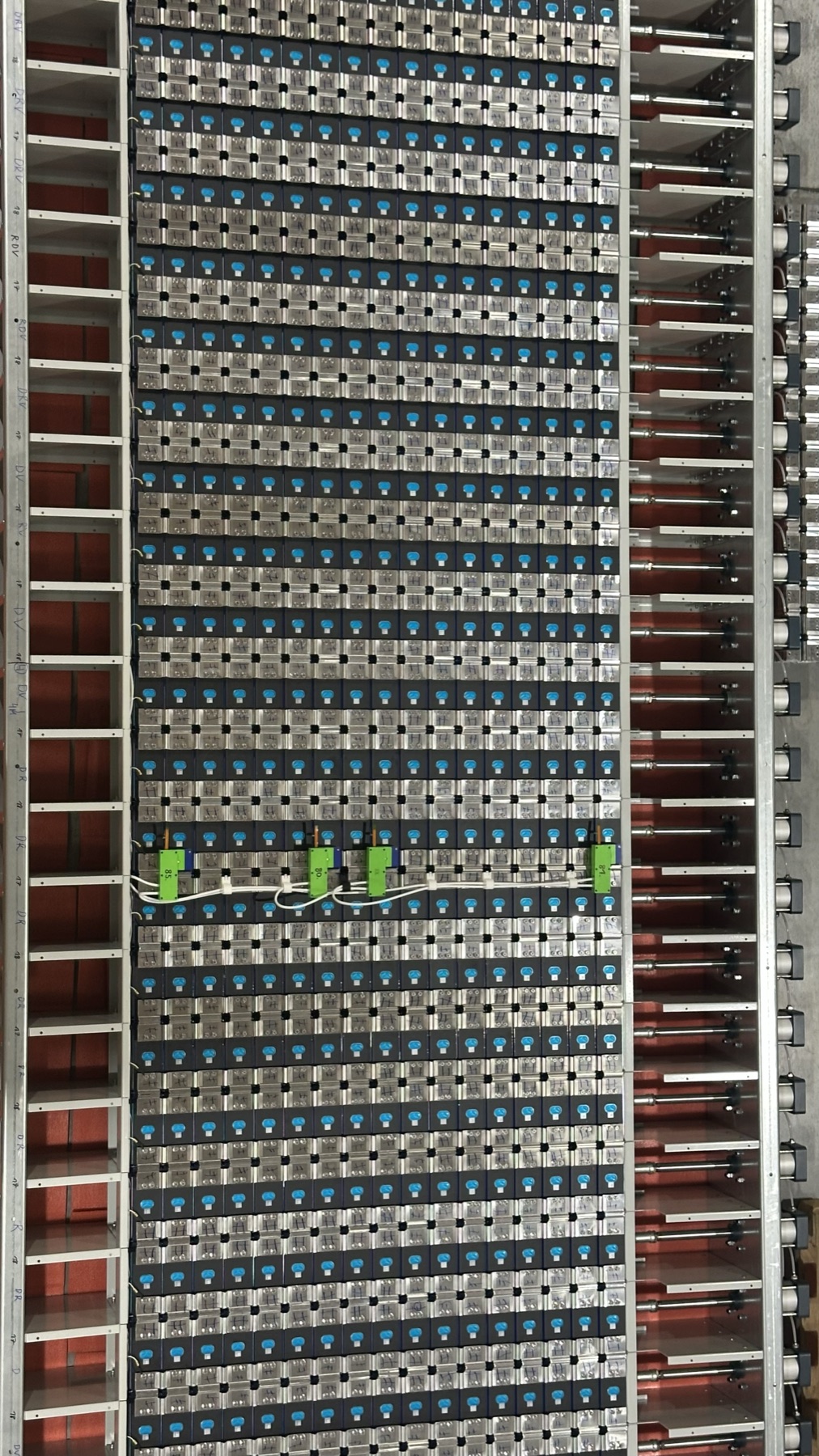
A deliberately narrow purpose: hold the lithium iron phosphate cells, heat exchangers, busbars and sensor elements under controlled thermal, mechanical and atmospheric conditions. The sensing and protection electronics stay in the Power compartment.

03 · Thermal

Conditioning and gas management

Cooling, airflow, nitrogen supply and gas-management equipment sit away from the stored energy and remain serviceable as a separate function.

Physically separated to limit the routes by which a fault can spread.

Gas-based thermal management shaped this separation. Heat passes from the cell faces into the inter-cell heat exchangers and the circulating gas, with conditioning provided by the Thermal compartment. Sensor signals reach the protection electronics in Power. We built higher to accommodate the architecture within the required footprint.

Functional separation removes avoidable electrical and heat sources from beside the cells, and creates defined boundaries for detection, isolation, intervention and containment.

The safety architecture in full →

Energy compartment

Why power and control electronics are separated from the cells

The cell is rarely where the failure starts. A 2024 analysis by the Electric Power Research Institute (EPRI), Pacific Northwest National Laboratory and TWAICE examined the grid-scale battery failures in EPRI’s incident database for which a root cause could be established.

89%Of those failures began outside the cell or module — in the controls, the balance of system, or the way the system was integrated, built and operated
11%Began in the cell or module itself

Source · EPRI, PNNL and TWAICE, Insights from EPRI’s Battery Energy Storage Systems (BESS) Failure Incident Database: Analysis of Failure Root Cause, white paper 3002030360, 15 May 2024.

Therefore, the Bessify Energy compartment holds the cells and nothing that switches power.

Looking down into the Energy compartment: rows of cells between inter-cell heat exchangers, with compression hardware along the sides.

No inverters, no power electronics, no control computers sit beside the cells. Those systems have their own compartments, physically separated from the cells they could otherwise ignite. Inside the Energy compartment the cells are left with their sensing, thermal control and compression.

Every cell is measured before installation, and a cell losing charge faster than its peers is found in the incoming record, not later in the compartment.

Inside the Energy compartment

Measure the conditions that shape cell life

The system takes 400 row-voltage measurements alongside cell-case, airflow and busbar temperatures. Compression-system pressure, row displacement and the nitrogen atmosphere are also monitored. Together, these measurements show how conditions vary across the Energy compartment and change over time.

Electrical sensing

400 row-voltage measurements

Voltage is measured at 400 cell rows, providing a distributed view of electrical conditions across the Energy compartment.

Atmosphere

Continuous oxygen monitoring

Oxygen concentration is continuously monitored within the nitrogen atmosphere, providing a measurement of atmospheric conditions around the cells.

Thermal

Cell-face heat transfer

Aluminium heat exchangers sit between adjacent large cell faces, giving a short, distributed path for heat removal.

Thermal sensing

Live thermal map

Up to 400 planned readings across all ten floors: 300 cell-face gradient, 90 airflow and 10 busbar. Final locations and channel count remain subject to build verification.

Mechanical

Controlled compression. Continuous monitoring

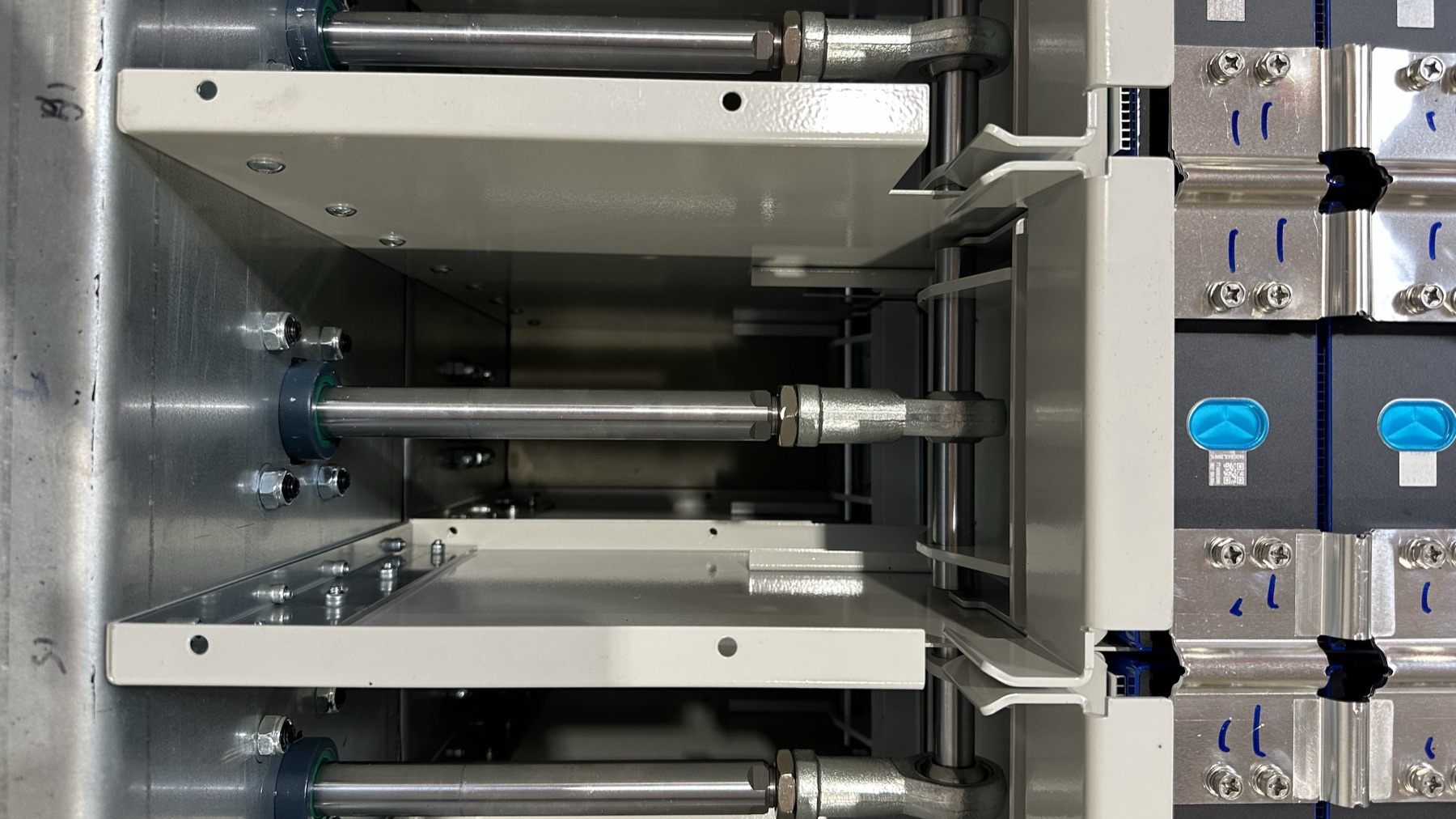
Active pneumatic compression maintains the mechanical conditions around the cells. Compression-system pressure and cell-row displacement are continuously monitored, tracking movement as the cells operate.

Pneumatic compression cylinders pressing on the end plates of the cell rows, with cells and busbars to the right.
Bessify compression system
Controls and interfaces

Protection acts directly. Software uses the data

Voltage, temperature and displacement have independent hardware protection paths. Each can invoke an inverter stop without waiting for the edge computer, cloud communication or higher-level analysis. The same measurement systems also supply data for supervision, records and optional computation.

Hardware protection

Direct stop paths

Battery management, temperature and displacement protection electronics sit in the Power compartment. Their direct stop paths remain independent of customer software and analytics.

Core

Supervision and records

The edge computer provides the local data platform. Core manages supervisory system and safety state, display, records and communications. Predictive analysis and optimisation sit outside this baseline role.

Open interfaces

Owner-selected services

Defined interfaces support customer-selected analytics, optimisation and energy management. Bessify Intelligence is an optional computational service. These interfaces do not expose the hardware protection layer for modification.

The current Bessify warranty offer requires Core to remain in service. Software support, optional services and warranty terms are addressed separately from the physical system specification.

Current design basis

System specifications

One physical Energy architecture supports three AC power configurations.

Usable energy6.0 MWh net usable AC energy at the system’s 690 V output terminals, at beginning of life
ChemistryLithium iron phosphate, prismatic cells
Configurations3 MW / 2 h · 1.5 MW / 4 h · 750 kW / 8 h
Power conversionBessify 750 kVA modular inverters
Round-trip efficiencyMeasured at the system’s 690 V alternating-current terminals, with auxiliary consumption included, at a stated ambient temperature. The figure will be published once measured.
Physical architecturePower, Energy and Thermal compartments
Thermal architectureRefrigerant-based conditioning, controlled closed-loop airflow, cell-face heat exchangers
Mechanical controlActive pneumatic compression with continuous pressure and row-displacement monitoring
AtmosphereNitrogen-inerted Energy compartment, with continuous oxygen monitoring and automatic nitrogen makeup
Gas managementControlled one-way discharge path; outside air is not drawn into the Energy compartment
Propagation preventionMulti-layered architecture including TRPPS 1: Thermal System Gas Management operation and inter-cell HX cooling
InterventionTRPPS 2: independently triggered water deluge and progressive flooding at its configured release condition; provision for retained firewater
Protection electronicsBattery management, temperature and displacement systems in the Power compartment, each with independent hardware input and output to command a stop
ManufactureDesigned, engineered and built by Bessify in Estonia

Specifications describe the present design basis and remain subject to engineering verification and certification.

Building, connecting or investing in storage?

Talk to us